Story summary





A challenging time
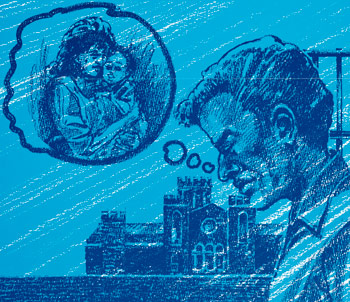
Prisoners may face separation from loved ones, lack of privacy, limited visits and phone calls, and overcrowding. When they are released, it can be difficult to find work or accommodation.
Families of prisoners may lose income and be viewed negatively by friends. They may have to travel a long way to visit the prison. Relationships may also break up.
Early prisoners’ aid
Prisoners’ aid and rehabilitation work began in Dunedin in 1877, with the Patients’ and Prisoners’ Aid Society. Early prisoners’ aid societies provided religious instruction, visits, letter writing, clothing, and fares home for released prisoners. Over time more organisations were set up to help prisoners. Most were religious, and worked closely with government officials.
NZPARS
A national organisation for prisoners’ aid societies, the New Zealand Prisoners’ Aid and Rehabilitation Society (NZPARS), was set up in 1959. From the 1960s to the 1990s it worked in partnership with the government. In the 21st century NZPARS continued to advise and support prisoners, but the national office closed after funding cuts. Regional offices continued to offer support to prisoners and their whānau/families.
The Howard League for Penal Reform
The Howard League was originally a British organisation that supported humane treatment of prisoners. The New Zealand Howard League was set up in 1924 by writer Blanche Baughan. It campaigned for community-based sentences rather than imprisonment, and for an end to capital punishment and flogging in prisons. In the 21st century it continued to promote better conditions for prisoners.
Other support and advocacy organisations
Other organisations that support prisoners and their families include:
- PILLARS, which works with released prisoners, mentors prisoners’ children, and supports and counsels families
- Prison Fellowship New Zealand, a Christian organisation which visits prisoners, runs a faith-based unit at Rimutaka Prison in partnership with the Corrections Department, and organises meetings between crime victims and offenders
- the Salvation Army, which runs houses where people can live when they are first released from prison
- iwi organisations, which work in some prisons to support a Māori approach
- JustSpeak, which aims to empower young people from all walks of life to think independently and speak out about justice issues
- People Against Prisons Aotearoa, a prison abolition and prisoner advocacy group that also runs the Prisoner Correspondence Network.

