Last and loneliest
In the late 18th and early 19th centuries, New Zealand was seen by Europeans as the most remote country on earth. Fifty years after James Cook arrived in 1769, fewer than 200 travellers had ended up settling there. In contrast there were 100,000 Māori. For most Europeans New Zealand was an unappealing prospect, a strange and lonely land reached after 100 days on dangerous seas; its coasts were thought treacherous, its inhabitants bloodthirsty. Only exceptional reasons led people to set off for such a distant corner of the globe.
Across the Tasman Sea
Some had come most of the way against their will to the Australian convict settlement of Sydney. Established in 1788, the town of Sydney had 5,000 people by 1813, and 12,000 by 1826. Many of New Zealand’s early immigrants first spent time in Australia, and most of them were only temporary visitors in search of items to trade.
Sealers
Among the earliest visitors were sealers, attracted by the promise of high-quality oil, and fur for hats (often sold in China in return for tea). Arguably, some sealers who set up camp in Dusky Sound in November 1792 and stayed for 11 months were the first non-Māori group to ‘live’ in New Zealand. Other people followed before the sealers moved to Australia’s Bass Strait in 1797, then from 1805 back to Foveaux Strait and the subantarctic islands. Most were temporary visitors, but a few married Māori women and fathered children. One was the first-known sealer and settler Thomas Fink, who was living near Bluff in 1805.
The tattooed European
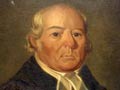
Sixteen-year-old James Caddell was a sealer when he landed with sailors on Stewart Island in 1810. They were attacked by Māori, and all were killed except for Caddell. He married the chief’s daughter, Tokitoki, had his face tattooed, became a local chief and, when Europeans encountered him in 1823, remembered so little of his mother tongue that it was difficult for him to act as interpreter.
By the early 1820s perhaps 100 sealers and deserters from ships were living semi-permanently in European–Māori communities on the coasts of southern New Zealand. Many were ex-convicts of English or Irish background, but there were also a few Americans (at least one of whom was black), and Indians (known as Lascars and Sepoys), who had arrived with the East India Company trading ships. As seal numbers were depleted and international prices declined, sealers supplemented their living by trading in flax, timber, pigs and potatoes, all bought from Māori.
Whalers
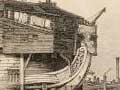
As early as 1792, whalers came to the northern end of the country, also as temporary visitors. Whales provided oil, bone for corsets and ambergris, a waxy substance used as an aphrodisiac and a base for perfume. The whalers’ prey, sperm whales, were caught at sea. But before long the whalers would harbour in the Bay of Islands to replenish supplies and relax. Among them were many English and Americans, a few Scots and Irish, and the occasional Scandinavian, Spanish and Chinese. Māori tradition says that a few of these whalers – they were all male – left their whaling boats and set up on shore to trade from 1809.
Pākehā–Māori
The first women settlers, who landed in 1806, were the ex-convict Charlotte Badger and her fellow traveller Catherine Hagerty. Some seamen or ex-convicts lived with or close to Māori, learning their language, often fathering children with Māori women, and acting as go-betweens for traders, and interpreters. They were known as Pākehā–Māori.
The first settler?
Who was the first European to settle in New Zealand? We can never know for certain, but it may have been James Cavanagh, a convict sailor, who fled from the New South Wales government vessel, Lady Nelson, into the bush in the Bay of Islands in 1804.
Missionaries
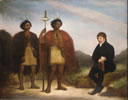
The first mission station was set up by a Yorkshireman, Samuel Marsden. A chaplain and magistrate in New South Wales, he arrived under the auspices of the Anglican Church Missionary Society at Rangihoua in the Bay of Islands in 1814. Marsden was accompanied by three missionaries and their families and others, including Thomas Hansen, who settled in the Bay of Islands and lived there until his death in 1874. By 1823 there were three mission stations in the area, and the Wesleyan Missionary Society had established a station at Whangaroa. Superficially, the missionaries were very different from other settlers. Outwardly committed to the moral life, they formed self-sufficient communities, with European wives and children. Yet like the other settlers, they were isolated, and some were more accepting of Māori ways than they cared to acknowledge.
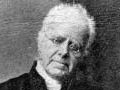
When the missionary Henry Williams arrived from England in 1823, not a single Māori had been converted to Christianity, and the community was divided. Four years later there were still only 20 adults and 40 children in the three Church Missionary Society stations of Rangihoua, Kerikeri and Paihia.